Hazard, exposure and vulnerability
A hazard is a potentially damaging process. Exposure concerns people and assets in its footprint; vulnerability concerns how susceptible they are and their capacity to cope.
Use a process to explain what you observe. Keep the location, scale and limits of the evidence in view.
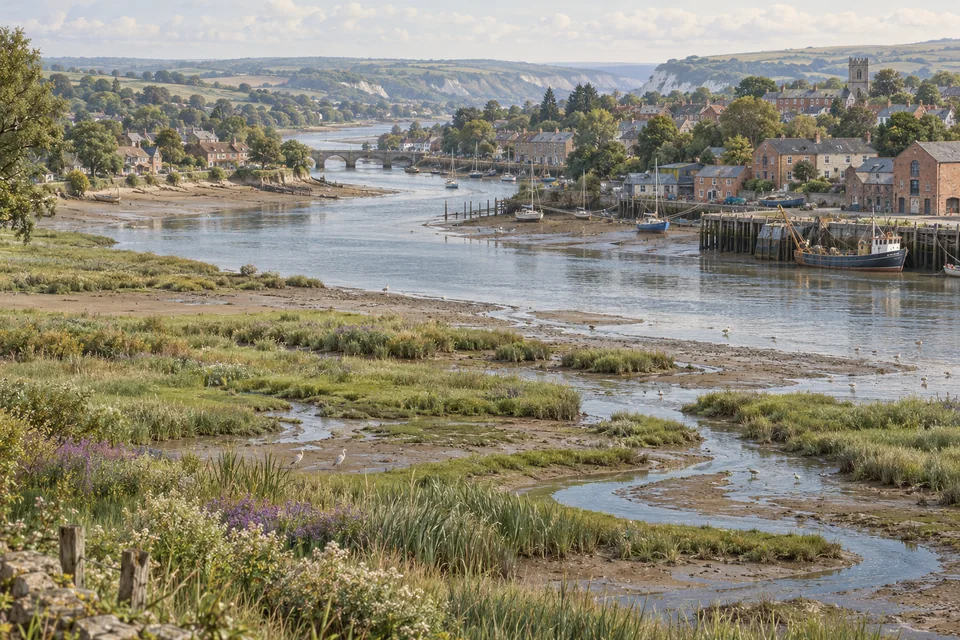
A hazard is a potentially damaging process. Exposure concerns people and assets in its footprint; vulnerability concerns how susceptible they are and their capacity to cope.
Moving plates interact at boundaries. Collision, subduction and other movement can build stress that is released along faults. The rupture produces seismic waves.
Rain enters stores and flows through a catchment by infiltration, overland flow, throughflow and channels. The division among pathways changes with soils, vegetation, slopes and prior wetness.
Flood management may increase conveyance, store water, slow runoff, warn people or reduce exposure. Different measures address different parts of the hazard–impact chain.
Waves and currents move sediment within a coastal system. A defence changes local processes and exposure, and may have consequences beyond the defended frontage.
Storm winds can drive water towards a coast; pressure, tide and coastal shape also affect the water level. Surge is not the same as rainfall flooding or a tsunami.
Organisms depend on other organisms and physical conditions through feeding, habitat and nutrient relationships. A change can have indirect effects through these links.
Clearing a forest changes habitat and stores of carbon as well as local land use. Roads, commodity demand, governance and household needs can interact.
Water security depends on availability, quality, access and reliability. A place with substantial rainfall can still face shortages if timing, storage, pollution or institutions limit usable supply.
Adaptation changes practices or infrastructure to cope with current or expected conditions. A response can reduce one vulnerability while creating costs or dependencies elsewhere.
Income, health, education, services and opportunity describe different aspects of development. A national average can conceal differences among households, regions and social groups.
Transport connects people to jobs, services and one another. Faster travel may improve access, but fares, coverage, safety and reliability affect who benefits.
Regeneration aims to change places through investment, land use, infrastructure or services. Different groups may value different outcomes.
A product can connect extraction, processing, design, assembly and sale in several countries. Gross exports and value retained in a place measure different things.
Power is a rate of energy transfer, measured in watts and larger units such as gigawatts. Energy is an amount accumulated over time, often measured in kilowatt-hours for electricity.
A claim needs evidence with a suitable place, period, population and unit. Local project evidence can explain a mechanism without representing an entire nation.
A sample captures part of a population or space. Random, systematic and stratified designs answer different practical needs; a convenient sample can exclude places or people.
An association means variables vary together. It can be consistent with a mechanism while also reflecting other variables, selection or shared trends.
A test evaluates data under assumptions and a null hypothesis. Choose it from the question, variable types, sampling design and dependence, rather than from a desired result.
A glacier’s mass balance reflects accumulation and losses. Area, thickness, volume and mass describe related but different properties.
No matches. Try a place, topic or skill.